MASCOT 2012 Meeting
The MASCOT NUM 2012 meeting has been organized by the CEA, Direction des applications militaires Île-de-France.
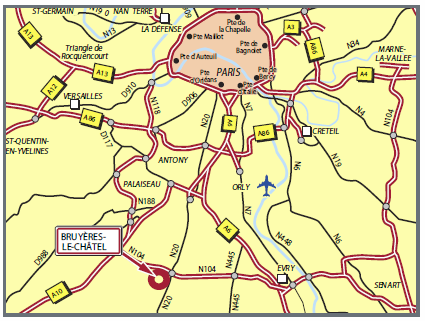
It took place at the TGCC (Très grand centre de calcul) in Bruyères-le-Châtel, from March 21st to March 23rd, 2012.
LOL The price of the best student communications have been confered to Jean-Yves Tissot (Université Grenoble I). He has won a prize of 1000€ to be used to go to a meeting. :-o
/*Announcement */
PhD students&
Le mercredi 21 mars aura lieu notre habituelle "Journée des doctorants".Les doctorants travaillant sur les sujets des incertitudes en simulation numérique, planification et modélisation des expériences numériques, validation de modèles, optimisation et conception sous incertitudes, applications environnementales et industrielles, ..., sont invités à soumettre des propositions de communication avant le 13 janvier 2012 à l'adresse gdrmascotnum@gmail.com.
Il est demandé un résumé de deux pages maximum (titre, auteur, bibliographie compris) incluant également une présentation courte (quelques lignes) de l'étudiant et du contexte général de sa thèse.
A l'issue de cette soumission, une sélection sera faite par le comité scientifique du GdR pour sélectionner les communications orales et les communications posters.
Comme les années précédentes, un prix d'une valeur de 1000 Euros sera décerné par le bureau du GdR au doctorant dont la communication orale sera jugée la meilleure pour participer à un congrès scientifique de son choix.
Program & Handouts
Day 1: March 21st (PhD students&
| 08h30 - 09h30 | Registration |
| Chairman : J-C. Fort | |
| 09h30 - 10h35 | A. Nouy (Ecole Centrale Nantes) Introductory conference: Tensor based numerical methods for high dimensional stochastic and parametric problems - Slides |
| 10h35 - 10h50 | Break |
| Chairman : F. Gamboa | |
| 10h50 - 11h25 | R. Benassi - Optimisation bayésienne par méthodes SMC - abstract - Slides |
| 11h25 - 12h00 | Y. Caniou - Analyse de sensibilité globale pour des modèles à paramètres d’entrée dépendants - abstract - Slides |
| 12h00 - 12h35 | A. Janon - Métamodèles base réduite pour l'analyse de sensibilité - abstract - Slides |
| 12h35 - 14h00 | Lunch & Posters |
| Chairman : J. Garnier | |
| 14h00 - 14h35 | Y. Le Guennec - Transient dynamics of three-dimensional beam trusses under impulse loads - abstract - Slides |
| 14h35 - 15h10 | M. De Lozzo - Construction de modèles de substitution dynamiques et multifidélité - abstract - Slides |
| 15h10 - 15h25 | Break |
| Chairman : H. Monod | |
| 15h25 - 16h00 | J-Y. Tissot - Une nouvelle introduction aux méthodes FAST et RBD - abstract - Slides |
| 16h00 - 16h35 | P. Lemaitre - Analyse de sensibilité pour des probabilités de dépassement de seuil - abstract - Slides |
Poster session
- A. Birolleau: Inférence bayésiennes pour la dynamique des gaz compressibles et propagation d'incertitudes par chaos polynômial itératif - abstract
- F. Bachoc: Validation Croisée et Maximum de Vraisemblance en cas d’erreur de modèle sur un processus Gaussien - abstract - poster
- G. Chastaing: Generalized Hoeffding-Sobol decomposition for dependent variables - Application to sensitivity analysis - abstract
- C. Chevalier: Stratégies séquentielles basées sur le krigeage pour l'identification d'un ensemble d'excursion - abstract - poster
- L. Le Gratiet: Sampling strategy for stochastic simulators with heterogeneous noise - abstract - poster
Day 2: March 22nd
| 08h30 - 09h30 | Registration |
| Chairman : F. Poggi | |
| 09h30 - 09h50 | T. Massard (CEA/DAM, Scientific Director) Les moyens de calcul de la DAM : applications internes et collaborations - Slides |
| 09h50 - 11h00 | O. Roustant (Ecole des Mines de Saint Etienne) Recent advances and block-additive kernels for computer experiments - Slides |
| 11h00 - 11h20 | Break |
| Chairman : B. Sudret | |
| 11h20 - 12h30 | A. Owen (Stanford University) Sampling to understand high-dimensional functions (Part 1) - Slides |
| 12h30 - 14h00 | Lunch & Computing center visits |
| Chairman : B. Iooss | |
| 14h00 - 14h20 | C. Prieur (Université Joseph Fourier), F. Mangeant (EADS IW), B. Iooss (EDF R&D) Actions du GdR MASCOT-NUM - Slides |
| 14h20 - 15h20 | M. Asch (Univ. de Picardie Jules Verne) Problèmes inverses et applications dans la surveillance de l’environnement marin - Slides |
| 15h20 - 15h40 | Break |
| Chairman : F. Mangeant | |
| 15h40 - 16h40 | S. Putot (CEA/LIST) Automatic determination of numerical properties of software and systems - Slides |
| 16h40 - 17h00 | A. Pasanisi (EDF R&D) Le projet ANR OPUS (Open Source Platform for Uncertainty treatment in Simulation, 2008-2011) - Slides |
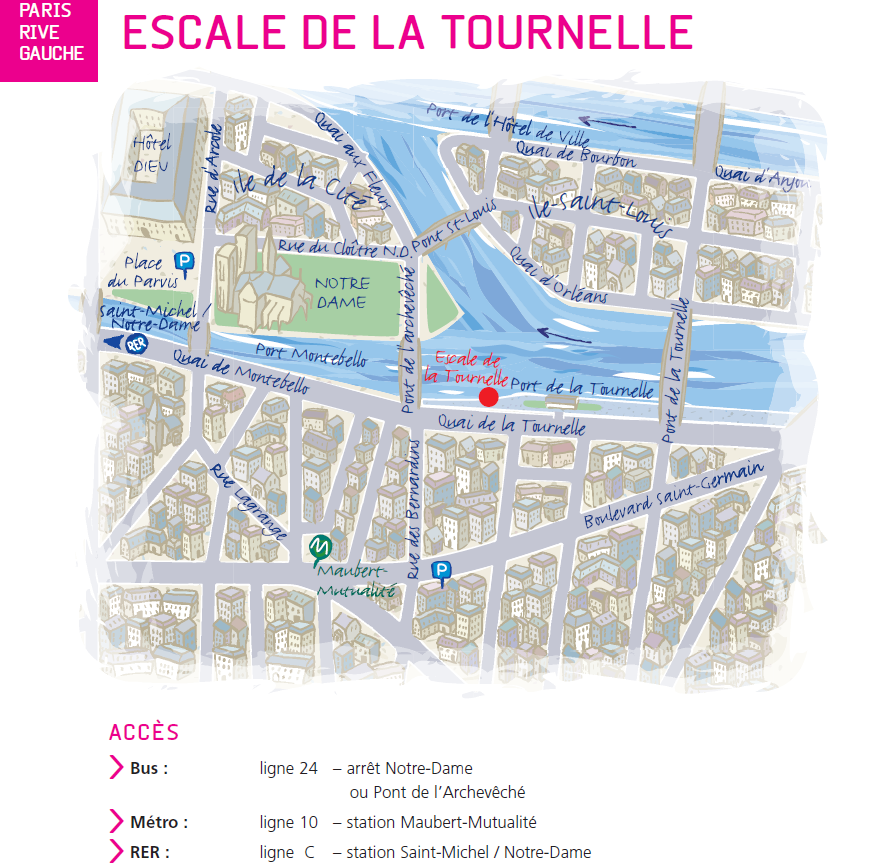
| Evening | Social event in Paris, Île de la Cité (reception starting at 8pm). More information. |
Day 3: March 23rd
| Chairman : E. Vazquez | |
| 09h30 - 10h40 | F. Bach (INRIA) Sparse methods for machine learning. Theory and algorithms. (Part 1) - Slides |
| 10h40 - 11h00 | M. Ravachol (Dassault Aviation) Le projet CSDL (Complex System Design Lab, 2009-2012) : enjeux, motivations et premier bilan - Slides |
| 11h00 - 11h20 | Break |
| Chairman : L. Pronzato | |
| 11h20 - 12h30 | A. Owen (Stanford University) Sampling to understand high-dimensional functions (Part 2) - Slides |
| 12h30 - 14h00 | Lunch & Computing center visits |
| Chairman : N. Villa | |
| 14h00 - 15h10 | F. Bach (INRIA) Sparse methods for machine learning. Theory and algorithms - Slides |
| 15h10 - 15h30 | Break |
| Chairman : C. Prieur | |
| 15h30 - 16h15 | S. Da Veiga (IFP Energies Nouvelles) Constrained Gaussian process |
Invited speakers
Courses:
- Francis Bach (INRIA-ENS) - Sparse methods for machine learning: Theory and algorithms - abstract
- Art Owen (Stanford University) - Sampling to understand high-dimensional functions, I & II
- These lectures will cover sampling based methods for understanding functions. As Diaconis has noted, even having a closed form expression, does not mean that we know which inputs to a function are most important. In many engineering applications, we have only the function inputs and outputs; that is the function is a 'black box'. Sampling turns functions into data, which we can analyze. Because we control the sampling, very efficient algorithms are available. The material will include basic results on ANOVA of the unit cube, global sensitivity indices, the dimension distribution, quasi-Monte Carlo and quasi-regression. There will also be some new material, joint with Josef Dick, on which variables most affect extreme values of a function. Art Owen is a professor of Statistics at Stanford University. He developed empirical likelihood, now widely used in econometrics, and randomized quasi-Monte Carlo sampling, now applied in finance and computer graphics. His work on quasi-Monte Carlo originated with applications to computer experiments. He also works on problems of high dimensional data arising from bioinformatics and on the Internet.
- Marc Asch (Université de Picardie Jules Verne) - Problemes inverses et applications dans la surveillance de l'environnement marin
- Les ondes acoustiques sont très efficaces pour l'exploration et la surveillance des zones sous-marines. Pour cela, nous devons résoudre des problèmes directes et inverses dans un milieu très hétérogène (eau, sédiments, végétation, ...) soumis a des conditions limites variables et aléatoires. Dans cet expose nous présenterons des approches déterministes et statistiques pour la résolution de quelques cas très concrets issus de nos travaux récents.
- Richard Klein (Lawrence Livermore Nat. Lab. - Univ. of California at Berkeley) - Advances and Challenges in Uncertainty Quantification with Application to Climate Prediction */
- Olivier Roustant (Ecole des Mines de Saint-Etienne) - Block-Additive kernels and other contributions in computer experiments
- Sebastien Da Veiga (IFP Energies Nouvelles) - Constrained Gaussian process modelling
- Anthony Nouy (Ecole Centrale de Nantes) - Tensor based numerical methods for high dimensional stochastic and parametric problems
- Tensor-based methods are receiving a growing attention for their use in high dimensional applications in scientific computing. Such applications naturally arise in the context of uncertainty quantification when adopting a stochastic parametric modeling. In this context, tensor-based methods have been recently introduced for the approximate solution of high-dimensional stochastic parametric models, using the tensor structure of their multiparametric solution. These methods are based on the construction of separated representations (tensor product approximation) of the parametric solution, thus providing an approximate representation on an adapted and automatically generated low dimensional basis of parametric functions. Different strategies are here presented for the construction of tensor approximations. A first class of methods consists in using classical approximations of tensors within global iterative solvers (Fixed point, Newton, Krylov projections, ...) which are traditionally used with more conventional approximation techniques. A second class of methods, recently called Proper Generalized Decomposition methods, consists in directly constructing a representation of the solution using a definition that does not require a priori information on the solution but only on the model it is solution of. Recent advances on the analysis of this latter class of methods will be presented. Their connections wih optimal model reduction will be discussed and specific tensor formats will be introduced in order to take part of the specificities of stochastic problems. Finally, other definitions of tensor product approximations using evaluations of the response (partial information on the solution) will be introduced, thus leading to non intrusive constructions of tensor approximations.
- Sylvie Putot (CEA LIST) - Automatic determination of numerical properties of software and systems
- Certains programmes, dont le bon fonctionnement est critique en particulier lorsqu’ils peuvent impacter la sécurité de personnes, requièrent une preuve formelle de leur bon comportement. Une propriété classique d’intérêt est l’absence d’erreurs à l’exécution dans le programme, qui a par exemple pu être prouvée automatiquement par analyse statique pour le programme complet de commande de vols des Airbus A340-A380. Cependant, la preuve automatique de propriétés fines de comportement sur des programmes numériques même relativement simples reste un problème mal résolu. Nous présenterons ici une approche basée sur l’analyse statique par interprétation abstraite, dans laquelle nous bornons les valeurs prises par les variables du programme ainsi que la différence de comportement entre l’implémentation en nombres flottants d’un programme et son comportement idéalisé en nombres réels. Cette approche nous permet également d'étudier la propagation d'incertitudes déterministes dans ces programmes. Enfin, nous évoquerons des extensions récentes mélangeant intervalles et incertitudes stochastiques.
Social event
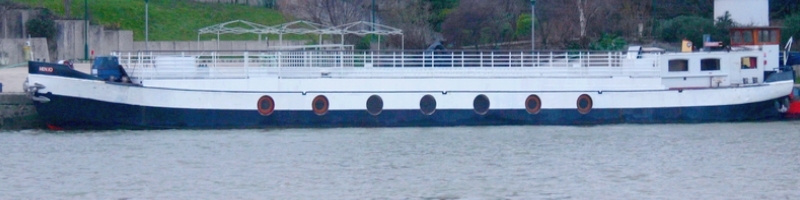
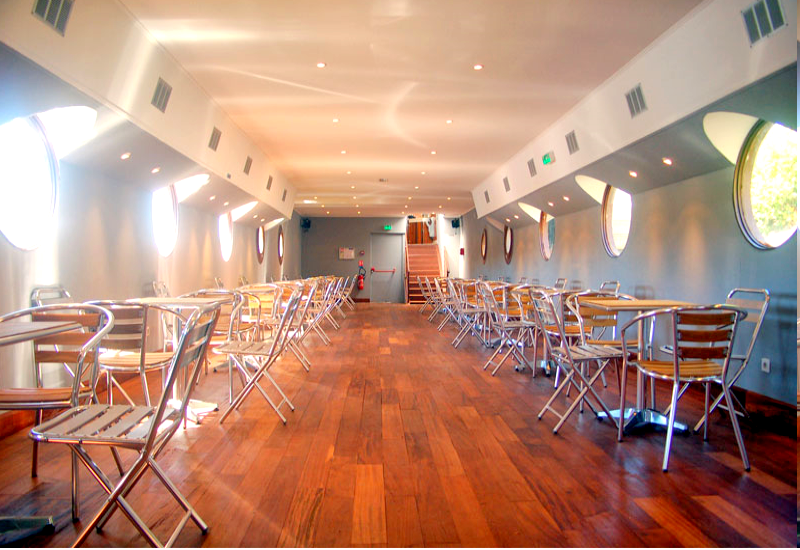
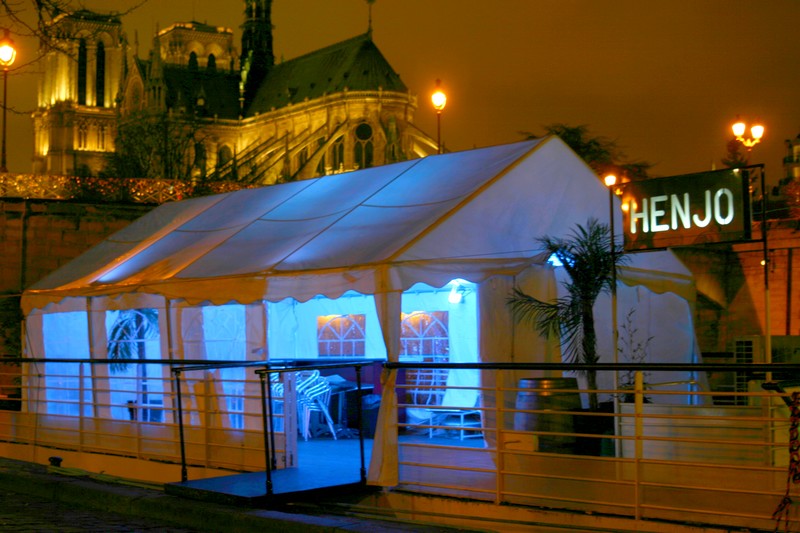
On March 22nd evening, a gala dinner will take place in Paris, Île de la Cité (more information) with drinks and a DJ musical ambiance until 3am. Reception begins at 8pm. You can find some photos of the boat hosting the dinner below. The dinner is restricted to the first 70 guests (first come, first served). If unfortunately you cannot attend the gala, please inform loic.le-gratiet@cea.fr. The invitation will then be proposed to one of the participants who have been denied due to the restriction to the first 70 guests.
Localization
Some pictures
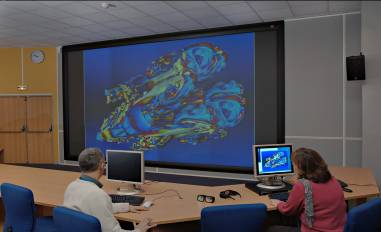


Très grand centre de calcul: 6500m2 dedicated to the housing of supercomputers for use by the european scientific community (CURIE computer: phase 1: 100 Teraflops early 2011, phase 2: 1,5 Petaflops late 2011).
Contacts
Contact: Françoise Poggi (CEA Arpajon) francoise.poggi@cea.fr
Organization: Françoise Poggi (CEA Arpajon), Bertrand Iooss (EDF R&D), Michelle De Cornuaud (CEA Arpajon), Loïc Le Gratiet (CEA Arpajon), Alain Huck (CEA Arpajon) et Alexandre Janon (LJK Grenoble)



/*
BEGIN:VCALENDAR
BEGIN:VEVENT
DTSTART;TZID=Europe/Paris:20120321
DTEND;TZID=Europe/Paris:20120323
SUMMARY:GDR MASCOT-NUM 2012 Meeting
LOCATION:Bruyères le Châtel
END:VEVENT
END:VCALENDAR
*/